
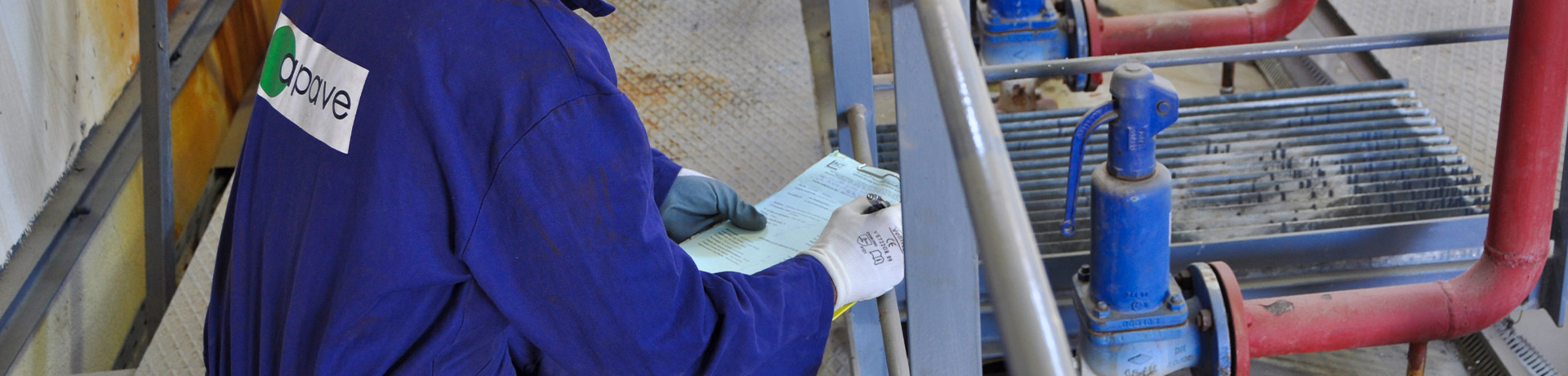
Pressure vessel inspection and safety valve calibration
Why have your pressure vessels inspected?
Pressure vessels are used in a wide range of industries. However, their operation involves significant mechanical and thermal stresses due to pressure and temperature.
Regular inspection enables us to :
- Ensure the safety of people and installations : the failure of a pressure vessel can lead to serious consequences, such as leaks, fluid splashes or explosions.
- Ensure regulatory compliance : pressure equipment is subject to strict commissioning, inspection and maintenance requirements.
- Prevent breakdowns and anticipate maintenance interventions, since inspection detects component wear, corrosion, leaks and safety valve malfunctions.
- Extend equipment service life
Regular monitoring of pressure vessels helps to ensure that the equipment is operating under safe conditions, in line with its design.
Do you have any questions?
Let's discuss the inspection of your pressure vessels and the setting of their safety valves.
Why are safetyvalve settings essential?
Pressure vessels are widely used in industry, including boilers, compressors, compressed air tanks and autoclaves. Their operation involves risks associated with overpressure, which can lead to human and material hazards, such as explosions.
Such equipment is protected by safety valves, whose correct operation must be regularly checked through an operation known as " safety valve calibration ".
Over time, and depending on operating conditions, these valves can become maladjusted or deteriorate. Several factors influence their operation:
- Component wear
- corrosion
- Deposits or impurities
- Ageing of the adjusting spring
- Vibration or mechanical stress, etc.
Safety valves must therefore be carefully monitored.
Support offered by Apave Cameroon
Our certified teams can support you in the inspection of your pressure vessels, such as :
- Steam or superheated watergenerators
- Vessels : for gas, steam or superheated water
- Piping systems
- Pipelines : plant pipelines (industrial sites and facilities), transport pipelines (pipelines, for example), etc.
- Pressure fittings: valves, plugs, taps, devices with closing covers (such as autoclaves, storage tanks, etc.), boilers, heat exchangers, etc.
- Safety accessories: valves, level alarms, fire extinguishers
Assemblies: several pieces of pressure equipment assembled by one manufacturer to form an integrated, functional whole.
Poorly maintained and non-compliant, your pressure equipment can lead to major incidents and accidents.
In application of our approval from the Ministry of Mines, Industry and Technological Development (Decree n°99/819/PM), our regulatory monitoring of industrial installations includes:
- Review of operating file
- Periodic inspections of equipment and protective devices (in accordance with the inspection program drawn up by the operator and with regulations, in particular) and technical support.
- Intervention and monitoring of repair work
We intervene throughout the life cycle of your pressure equipment.
A pressure vessel inspection is coming up?
Your questions about pressure vessel inspection and safety valve calibration
-
What are the risks associated with the deterioration of pressure vessels?
Pressure vessels are subject to mechanical and thermal stresses that can lead to :
- Fire and explosion hazards
- Leakage of hazardous substances (toxic gases, vapors, flammable or corrosive fluids, etc.)
- Poisoning and burns
- Property and environmental damage
- Business interruption, productivity and maintenance costs
- Penalties for non-compliance
-
When should pressure vessels be inspected and safety valves calibrated?
Regular inspections (frequency depending on equipment category and use) and calibration of safety valves are crucial:
- Before and when the equipment is commissioned (initial inspection)
- At periodic intervals
- After any maintenance or modification (repair, relocation, etc.)
- In the event of an incident or anomaly
-
What is the setting of a safety valve?
Setting a safety valve involves determining and adjusting the pressure at which the valve automatically opens to release excess pressure in a device.
When a piece of equipment exceeds its design pressure limit, the valve opens to evacuate the fluid (air, steam, gas or liquid), avoid overpressure and prevent property damage and the risk of explosion. -
What operating conditions affect a safety valve?
Because they can seriously upset or damage safety valves, operating conditions must be taken into account when setting these valves.
Operating conditions refer to all the parameters and constraints under which the equipment operates during use:- Operating pressure
- Type of fluid (air, steam, gas, liquid or chemicals)
- Fluid or environmental temperature
- Operating cycles (continuous, frequent start-ups and shutdowns, pressure variations)
- Environment and conditions around the plant (dust, humidity, vibrations, etc.)
Why choose Apave Cameroon?

Safety at the heart of our operations

Proximity

Compliance with strict safety standards
Check out
our latest news