
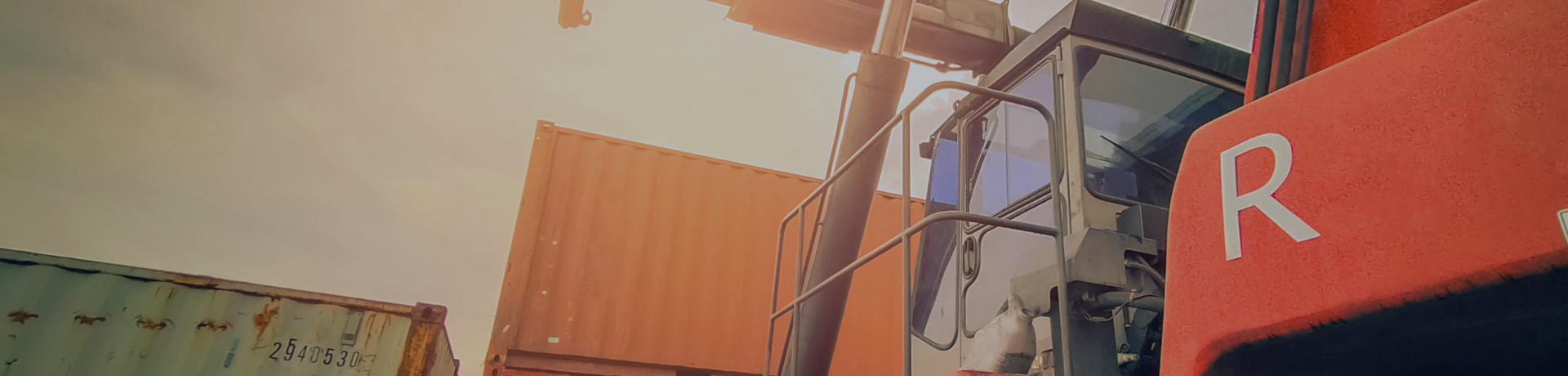
Lifting and Handling
Why secure your lifting and handling equipment?
Lifting and handling equipment enables you to move, lift or position heavy loads with precision on your industrial sites, construction sites or warehouses.
However, even the slightest malfunction can lead to human, material and operational risks: workplace accidents, falling loads or crushing hazards, breakdowns, production stoppages, penalties for non-compliance, etc. That's why, in Cameroon, occupational health and safety regulations, notably those set out in the Labour Code, require employers to ensure the maintenance and conformity of equipment used by workers.
To prevent any risk, you owe it to yourself to carry out inspections of your lifting and handling equipment throughout its lifecycle.
Tell us about your project
Ask us your questions and we'll get back to you as soon as possible.
Our lifting and handling inspection services
At Apave Cameroon, our teams of experts visit your site to check your lifting and handling equipment.
In order to assess their state of safety and preservation, our inspections focus in particular on :
- Initial commissioning inspection
- Inspection after return to service following repair or modification
- Technical and regulatory periodic inspections
We can also provide you with technical assistance (compliance audits, risk analyses, maintenance plans) and controls (load tests, NDT, verification of your safety devices).
We cover a wide range of equipment and accessories, including cranes, overhead and gantry cranes, forklift trucks, aerial platforms and freight elevators.
Each and every one of our inspections is expertly carried out to ensure safe, compliant and high-performance operation.
Lifting and handling: why include truck inspection in your inspection?
On construction sites, industrial sites or logistics platforms, the lifting equipment installed on vehicles used for transporting and handling loads (such as auxiliary loading cranes, tail elevators or lifting arms) is subject to heavy use. Their failure can lead to major incidents and accidents.
Including truck control in your inspections enables you to identify any anomalies, prevent risks and ensure the safety of your handlers during loading and unloading operations.
Your questions about inspecting your lifting and handling equipment
-
What equipment is covered by the lifting and handling inspection?
Lifting and handling inspection covers everything used to lift, move or position loads in industrial, logistics or construction environments. These include
- Lifting and handling equipment: cranes (fixed and mobile), overhead and gantry cranes, hoists, winches and jib cranes, forklift trucks, etc.
- Lifting accessories: chains, cables, hooks
- Mechanical transport equipment: aerial work platforms, mobile elevating work platforms (MEWPs), construction site hoists and elevators
- Control, safety and warning equipment: load indicators, dynamometers, lifting height limiters, position sensors, overload alarms, anemometers, etc.
- PPE: hard hat, gloves, harness and safety shoes
This equipment must be inspected to check that it is in good condition, in good working order and that its devices are effective.
-
What are the risks of poorly maintained lifting and handling equipment?
In the event of poor maintenance of all lifting and handling equipment, the risks can be considerable, even very serious: breakdowns and production stoppages, accidents to workers (falling loads, injuries, crushing, etc.).
Failure to comply with regulations can result in legal penalties. It is imperative to rigorously check the proper operation and compliance of this equipment.
-
What is a truck inspection?
In the context of lifting and handling equipment inspection, truck inspection refers to the checking of lifting equipment installed on a truck.
The equipment concerned is often truck-mounted auxiliary loading cranes, lifting arms, tail elevators, winches or on-board lifting systems.
Why choose Apave Cameroon?

Safety: our concern

Proximity

Personalized support
Check out
our latest news